Why the best bakeries swear by infrared assist
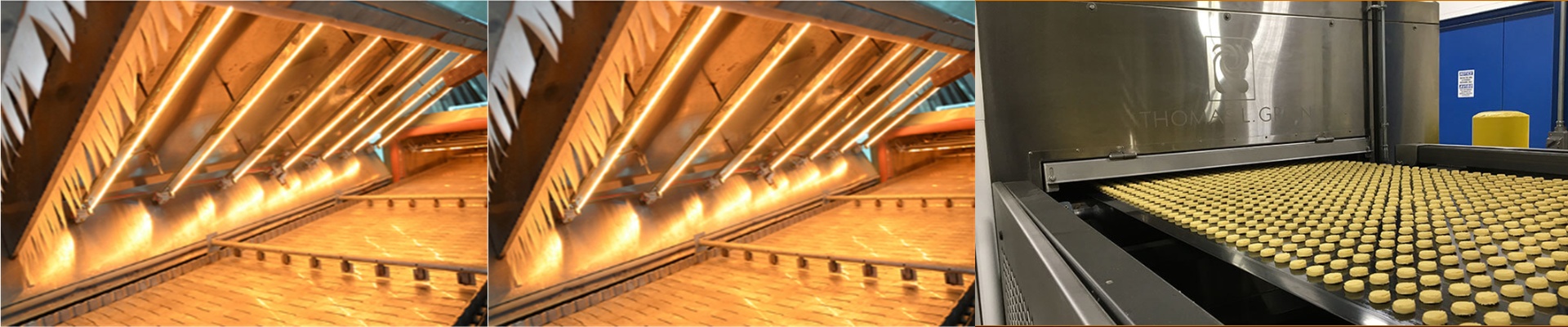
We build replacement heaters for rotary ovens, and let’s be real: if you’re serious about your bake, you need infrared assist. It’s not a question of if. It’s a question of how to add it without frying the board or ending up with loaves that bake unevenly. Infrared halogen tubes throw direct radiant heat that sinks right into the dough. That means the surface heats fast, the main convection system doesn’t have to work overtime, and your bake cycles get shorter.
Power, voltage, and why the size matters
Most replacement units run on a 400V, 2500W halogen infrared tube, about 300mm long. That size isn’t random. It packs enough punch to hit target temps quickly, without pushing your oven’s electrical draw through the roof. The 400V rating is smart, too. At the same wattage, it pulls less current than a 230V setup, which keeps cables cooler and lets you use smaller wiring. And the compact footprint? Huge. Rotary ovens are tight spaces. A 300mm tube slips right into the existing reflector assembly, but it still throws serious heat. Just plan for it. Your oven’s cooling and airflow need to handle the extra warmth.
The tube, the coating, and the connector that makes life easy
We use a quartz halogen tube with a reflective coating behind the filament. That coating pushes the energy forward, so more of it lands where you need it instead of being wasted. And the halogen gas keeps the filament stable at high heat, which means the color temperature stays consistent and the output stays predictable over time. For installation, we go with the R7s connector. It locks the tube in place end-to-end, handles the oven’s heat, and makes replacement a straight swap. No custom brackets. No messing with loose terminals. Line it up, seat it, and wire it. Done.
How it plays out in a rotary oven
In a rotary oven, you’re chasing a consistent crust and timing you can count on. Infrared assist hits the surface instantly, which helps control browning and keeps moisture from migrating at the start of the bake. The payoff? Fewer rejects, cycles that repeat reliably, and less strain on the main heating elements. Here’s the catch: concentrated radiant heat needs proper airflow. If your oven’s cooling isn’t up to the job, nearby parts can run too hot. So match the tube to the oven, and the oven to the process.