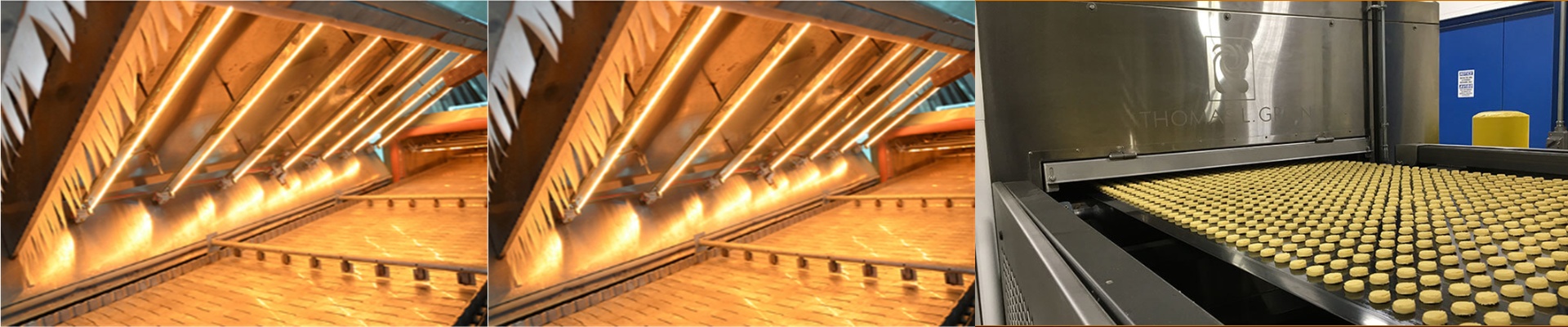
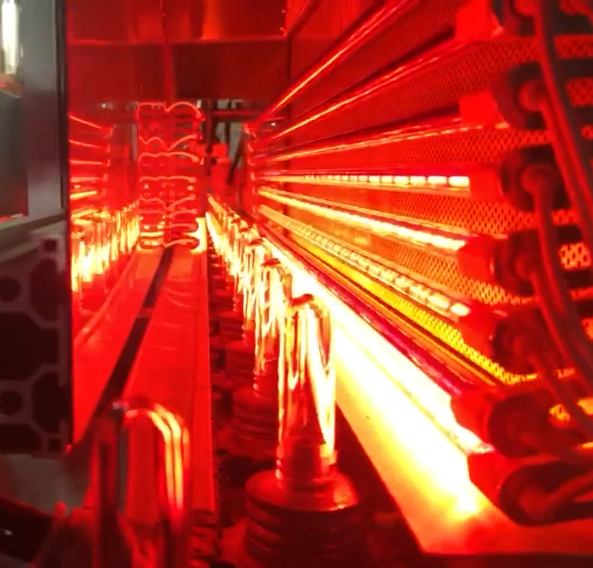
On the blow molding line, uneven preform heating quietly eats your margin. You spot it in off-spec bottles, in the constant fine-tuning of the heating tunnel, and in the energy bill that keeps climbing for no obvious reason. We built our short wave infrared heating lamps to break that cycle. What matters, technically These emitters are short wave infrared, built around a quartz halogen design that responds fast and gives tight spectral control. Peak wavelengths are tuned for the PET absorption band, so the heat goes into the material where it’s needed—not into the machine frame. We match the power and voltage specs common on OEM machines, and the R7s connector drops straight into existing blow molder heating stations. Output stays stable over long runs, and the filament geometry is shaped to keep the heating profile consistent across the preform neck and body. Why it works in stretch blow molding Timing is everything. Fast, repeatable preform heating cuts cycle time and reduces scrap. Our lamps hit operating temperature quickly, so the heating tunnel settles sooner after a restart or changeover. That means more consistent bottle wall thickness, fewer pinholes, and less trim waste. Energy use drops because the energy is absorbed directly, not wasted heating air and fixtures. In practice, you get more bottles per shift with fewer line stops. Here is what you need to keep straight These lamps are drop-in replacements for most blow molding machines, but alignment is critical. If the emitters are mis-focused, you get hot and cold spots that show up as quality drift. We provide exact mounting and focus data, but you still need to verify reflector condition and preform positioning. Keep the lens and reflector clean. Even a thin film buildup can shift output and stretch heating time. Treat the system like precision optics, and you’ll get the performance it’s capable of.